

How to Design a Garden That Looks Good from Inside the House
A well-designed garden should look attractive not only when you are outside, but also when viewed from inside the house.
For many homeowners, the garden is most often seen through kitchen doors, living room windows, or a rear extension. Designing around these views can make the whole property feel brighter, larger and more connected.
Start with the Main View
Begin by identifying the rooms that look directly onto the garden.
Common viewpoints include:
Kitchen windows
French or bi-fold doors
Living rooms
Dining areas
Home offices
Upstairs bedrooms
The strongest feature of the garden should sit naturally within one of these sightlines.
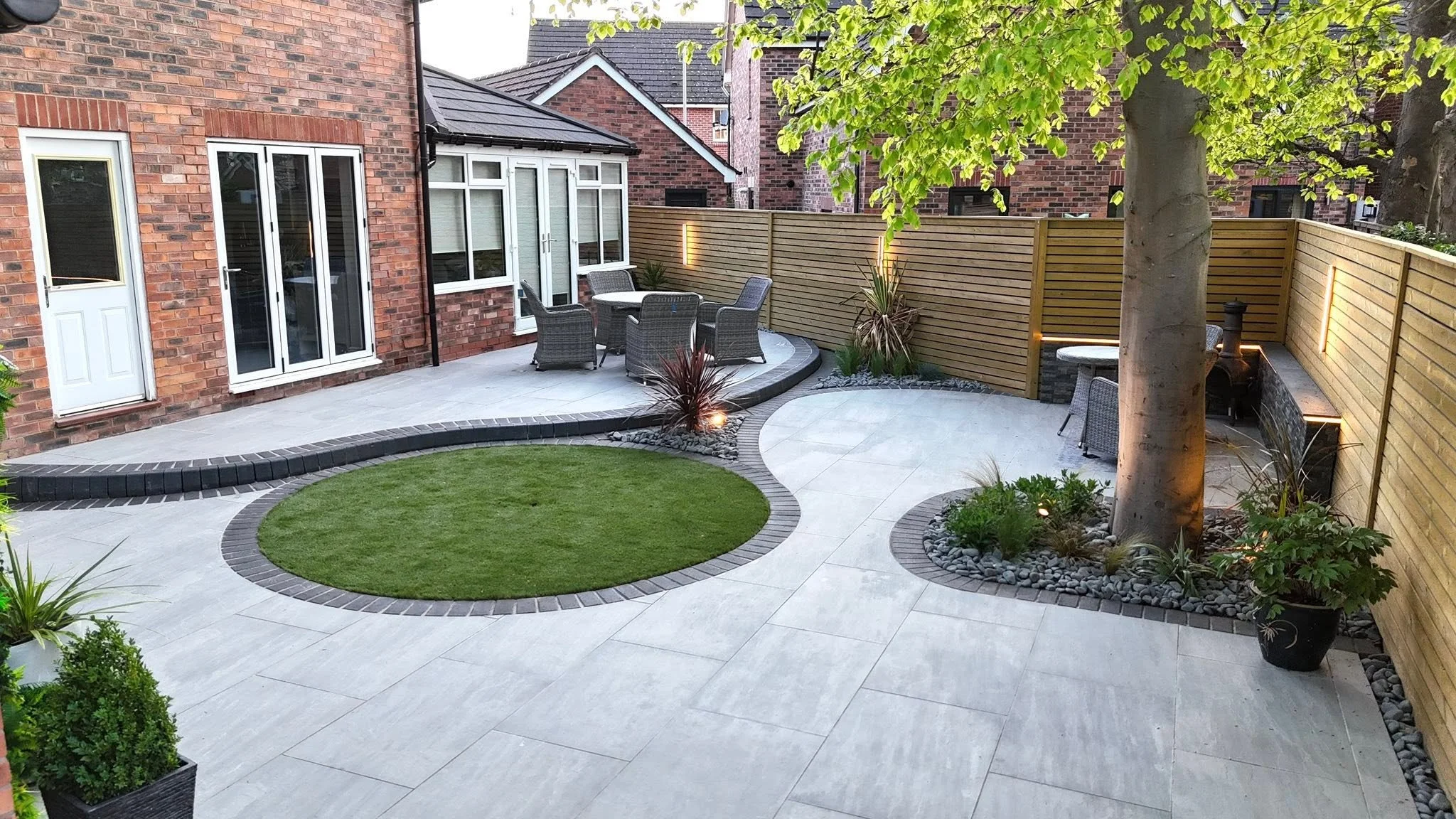
This could be a seating area, a feature tree, a raised bed, a water feature, or an attractive section of paving.
Create a Clear Focal Point
A focal point gives the eye somewhere to rest and helps the garden feel intentionally designed.
Good options include:
A statement tree
A pergola
A feature planter
A built-in seating area
A decorative screen
A fire pit
A water feature
The focal point should suit the garden's scale and be visible from the main room inside the house.
Use Paths and Paving to Lead the Eye
Paths, patio lines and edging can guide the view through the garden.
Long, straight lines can make a garden feel deeper, while angled paths and curved borders can create movement and soften the layout.
For modern Staffordshire gardens, large-format porcelain paving can create a clean visual link between indoor flooring and the outdoor patio.
Frame the View with Planting
Planting can be used to frame key parts of the garden, much like a picture frame.
Use shrubs, grasses, small trees or raised beds around the edges of the view while keeping the centre more open.
Layering plants at different heights can also add depth and make the garden more interesting throughout the year.
Think About Colour and Materials
Garden materials should complement the style and colours used inside the house.
For example:
Pale paving can brighten darker rooms
Warm sandstone can suit traditional properties
Porcelain works well with modern extensions
Timber fencing can soften hard landscaping
Dark planters can create contrast
Using a small, consistent palette usually creates a more polished result.
Add Year-Round Structure
The garden may be viewed from inside throughout autumn and winter, so it should not rely only on summer flowers.
Evergreen planting, ornamental grasses, structured borders and attractive fencing can keep the garden looking finished all year.
Outdoor lighting can also make key features visible after dark.
Hide Less Attractive Areas
Bins, sheds, utility areas and neighbouring boundaries can distract from the main view.
These can be screened using:
Slatted fencing
Trellis
Planting
Decorative panels
Garden storage
Carefully positioned structures
Screening practical areas allows the strongest parts of the garden to remain the focus.
Connect the House and Garden
The best designs make the transition between indoors and outdoors feel natural.
This can be achieved through:
Level or low-threshold patio access
Matching or complementary materials
Wide steps
Repeated colours
Lighting near doors
A patio aligned with the main room
A strong connection can make both the house and garden feel more spacious.
Garden Design in Staffordshire
Designing around the view from inside the house can transform how the garden feels every day.
TC Fencing and Landscaping helps homeowners across Stafford and Staffordshire create well-planned gardens with patios, fencing, planting, raised beds and complete landscaping solutions.
A successful garden should look good from every angle, whether you are relaxing outside or viewing it from the comfort of your home.