If you are planning a garden transformation, you may be wondering whether you need a garden designer or a landscaper.
Although the two roles often overlap, they are not the same.
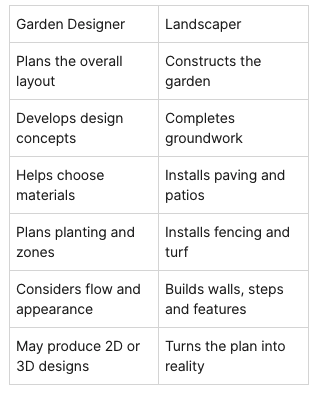
A garden designer generally focuses on how the finished garden should look and function, while a landscaper turns those ideas into reality through groundwork, construction and installation.
For larger projects, you may benefit from both.
What Does a Garden Designer Do?
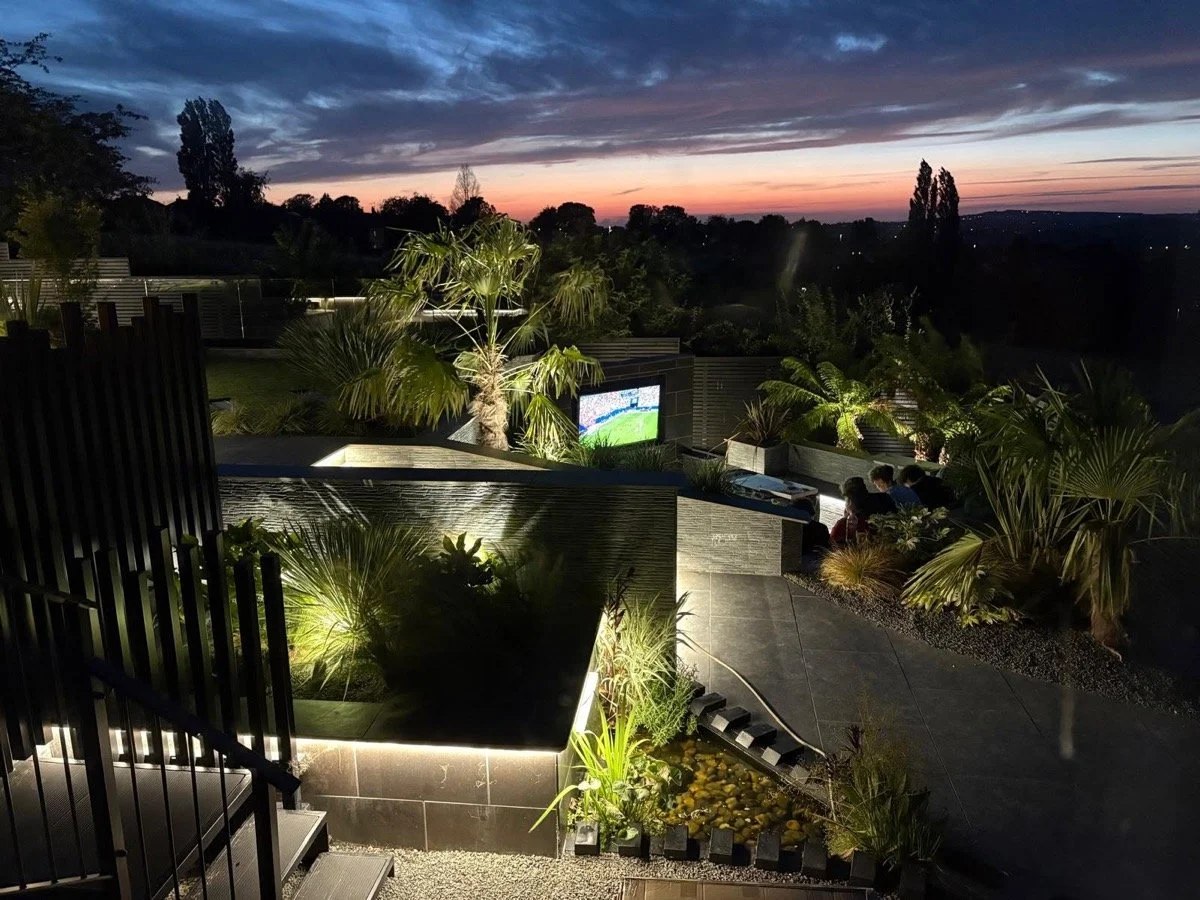
A garden designer helps plan the overall layout of your outdoor space before construction begins.
Rather than simply deciding where to put a patio or lawn, garden design considers how all the different elements work together.
This can include:
patios and seating areas
lawns
paths and access
planting
garden lighting
changes in level
outdoor kitchens
retaining walls
privacy
drainage considerations
A good garden design should also reflect how you actually use the space.
A family garden may need a lawn and play area, while another homeowner may prioritise outdoor dining, entertaining or low-maintenance landscaping.
What Does a Landscaper Do?
A landscaper is primarily responsible for the practical construction and transformation of the garden.
Depending on the project, landscaping work can include:
excavation and groundwork
patio installation
paving and paths
fencing
turfing
drainage
retaining walls
garden steps
planting
garden structures
levelling and preparation
Landscapers therefore take the design and physically create the finished outdoor space.
Garden Designer vs Landscaper: What’s the Difference?
The easiest way to understand the difference is:
A garden designer plans the garden. A landscaper builds it.
However, many modern landscaping projects require the two disciplines to work closely together.
For a simple job, such as replacing a section of fencing, you probably don't need a complete garden design.
For a full garden transformation, planning the entire space first can be extremely valuable.
When Do You Need a Garden Designer?
Garden design is particularly useful when:
you are completely redesigning the garden
you do not know how best to use the available space
several landscaping elements need to work together
your garden has awkward levels
you want a premium or highly finished result
you are making a significant investment
you want to visualise the garden before work begins
Design becomes even more important when you combine a patio, lawn, planting, fencing, lighting, steps, and entertaining areas in one project.
Making those decisions before construction starts can reduce the risk of expensive changes later.
When Do You Need a Landscaper?
Not every project requires detailed garden design.
You may only need a landscaper if you already know exactly what you want or the project is relatively straightforward.
Examples could include:
replacing a fence
installing a straightforward patio
laying new turf
repairing existing landscaping
improving drainage
replacing a path
However, even apparently simple projects can benefit from professional advice if levels, access or drainage are involved.
What About 3D Garden Design?
3D garden design can be especially useful for larger or more complicated projects because it allows you to see the proposed garden before construction begins.
You can visualise features such as:
patio size and position
seating areas
planting beds
fencing
garden lighting
paths
outdoor kitchens
different levels
It also lets you change the layout or materials before work begins.
TC Fencing & Landscaping offers scale-accurate 3D garden designs alongside its landscaping service, including consultation, layout planning, visualisation and material selection.
Is It Better to Use One Company for Design and Landscaping?
For many homeowners, yes.
Using separate designers and contractors can work perfectly well, but having one team handle both planning and construction can simplify the process.
The landscaper already understands:
how the garden has been designed
which materials have been specified
the intended levels
how different areas should connect
practical construction requirements
the overall vision for the finished space
It can also help avoid the situation where an attractive design proves unnecessarily difficult or expensive to build.
The strongest garden designs combine appearance with practical knowledge of groundwork, drainage, levels, construction and materials.
Do You Need a Designer for a Small Garden?
A small garden can sometimes benefit from design just as much as a large one.
When space is limited, every square metre needs to work harder.
Good planning can help avoid:
an oversized patio dominating the garden
awkward unused corners
poor access
too many different materials
a lack of privacy
insufficient planting
badly positioned seating
A carefully planned smaller garden can often feel considerably larger and more usable.
Choosing the Right Approach for Your Garden
Before deciding whether you need a garden designer, landscaper or both, consider:
How much of the garden is changing?
A complete transformation benefits more from detailed planning than a single replacement feature.
Do you already know what you want?
If you have ideas but struggle to bring them together, professional garden design can help.
Is the garden complicated?
Slopes, drainage problems, unusual shapes and multiple levels make planning more valuable.
What is your budget?
The greater the investment, the more important it becomes to make key design decisions before construction begins.
Garden Design and Landscaping in Staffordshire
For a complete garden transformation, you do not necessarily have to choose between a garden designer and a landscaper.
TC Fencing & Landscaping provides both garden design and professional landscaping across Staffordshire, covering patios, fencing, turfing, planting, drainage and complete garden transformations. Its 3D garden design service also allows homeowners to visualise layouts and materials before the landscaping work starts.
If you are planning a garden makeover in Stafford, Stone, Eccleshall, Penkridge or the surrounding area, contact TC Fencing & Landscaping to discuss your ideas and the right approach for your project.